
How to Choose the Right Heavy Duty Dog Kennel: Size, Material & Features Guide
A comprehensive technical guide to selecting the perfect heavy duty dog kennel, covering critical specifications including dimensions, wire gauge, frame material, locking systems, and essential features for different dog sizes and use cases.
Choosing the right heavy duty dog kennel requires understanding the technical specifications that determine quality, safety, and suitability for your dog. This guide breaks down the critical parameters you need to evaluate, with specific numbers and standards to help you make an informed decision.
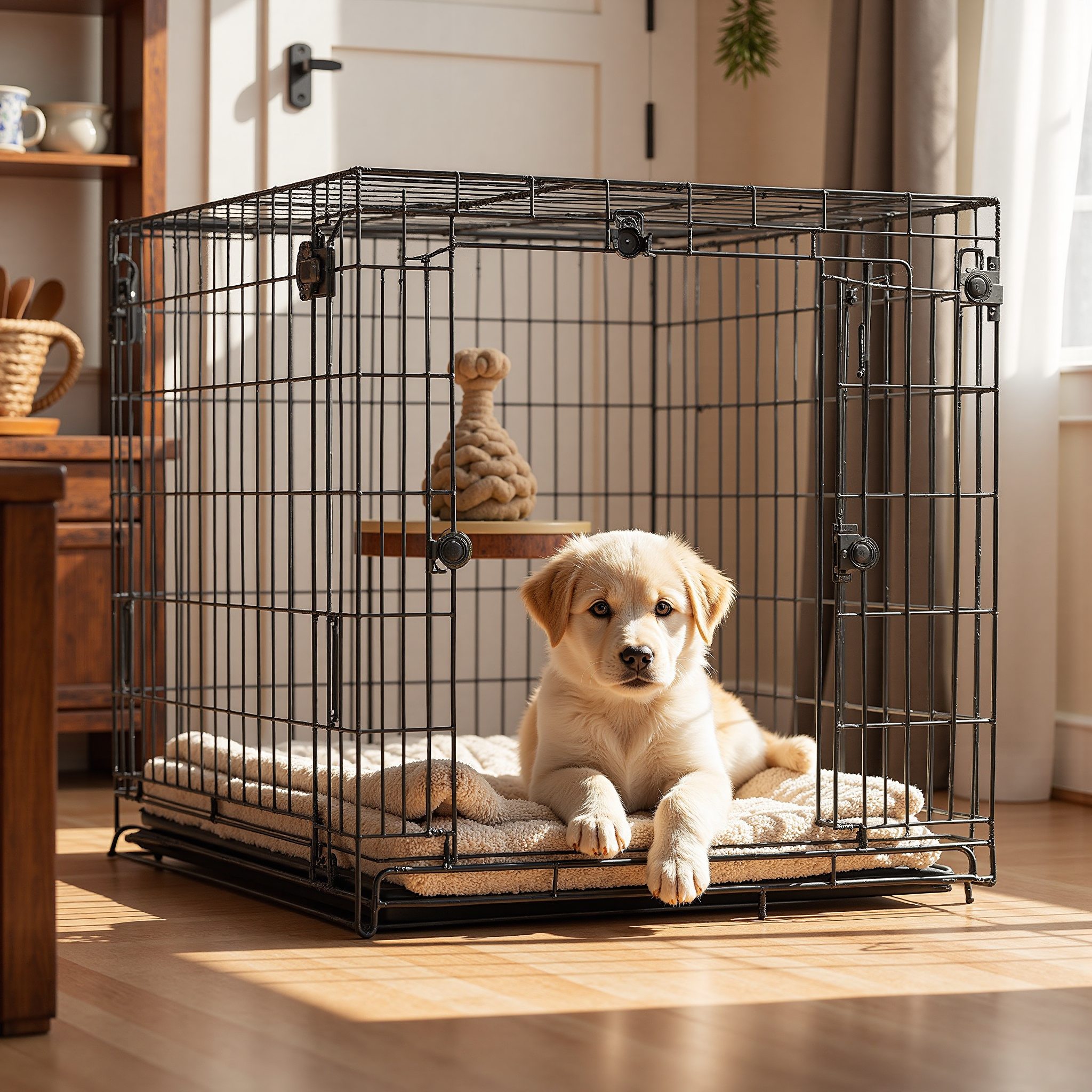
Essential Specifications at a Glance
Before diving into details, here's a quick reference table of key specifications for heavy duty kennels across different size categories:
| Specification | Small (30") | Medium (36") | Large (42") | XL (48") |
|---|---|---|---|---|
| Wire Gauge | 12 gauge | 11 gauge | 10 gauge | 10 gauge |
| Weight Capacity | 90 lbs | 120 lbs | 150 lbs | 200+ lbs |
| Frame Thickness | 1" tubing | 1.25" tubing | 1.5" tubing | 1.5" tubing |
| Door Openings | 1 door | 2 doors | 2-3 doors | 3 doors |
| Coating | Electroplated | Powder coat | Powder coat | Powder coat |
Understanding Wire Gauge

Wire gauge is the single most important specification for determining a kennel's strength. The gauge system works inversely — lower numbers mean thicker, stronger wire:
- 14-16 gauge — Standard kennels, suitable for small calm dogs only
- 12 gauge — Entry-level heavy duty, good for medium dogs up to 90 lbs
- 11 gauge — Mid-range heavy duty, handles dogs up to 120 lbs
- 10 gauge — True heavy duty, suitable for large and giant breeds up to 200+ lbs
- 8-9 gauge — Industrial/commercial grade for the most powerful breeds
Pro tip: Always verify the wire gauge from the manufacturer's specifications. Some products claim "heavy duty" but use 14 gauge wire, which is standard quality. True heavy duty kennels use 10-12 gauge wire minimum.
Frame Construction Standards
The frame provides the structural backbone of the kennel. Look for these specifications:
Tubing Diameter
- 1" diameter — Acceptable for small kennels (30" and under)
- 1.25" diameter — Standard for medium kennels (36")
- 1.5" diameter — Required for large and XL kennels (42"+)
Tubing Thickness
The wall thickness of the tubing matters as much as the diameter:
- Minimum: 0.065" wall thickness — Acceptable for most applications
- Recommended: 0.083" wall thickness — Better durability for active dogs
- Premium: 0.120" wall thickness — Maximum strength for giant breeds
Welding Quality
Inspect welding at every joint. Quality heavy duty kennels feature:
- Full penetration welds — not just spot welds
- Smooth, ground-down weld beads — no sharp edges or spatter
- Consistent weld quality throughout the entire structure
Locking Mechanism Requirements
The locking system is critical for security. Evaluate these features:
Lock Types
- Spring-loaded latch — Basic security, adequate for most dogs
- Sliding bolt latch — Better security, harder for dogs to manipulate
- Dual-latch system — Maximum security for escape artists
- Padlock-compatible — Allows additional security with your own lock
Latch Specifications
- Minimum 2" bolt length — prevents bending or forced entry
- Hardened steel construction — resists cutting or chewing
- Smooth operation — easy for humans, impossible for dogs
Coating and Corrosion Protection
The coating protects the steel from rust and extends the kennel's lifespan:
Coating Types Compared
- Electroplated zinc — Basic protection, suitable for indoor use, lifespan 3-5 years outdoors
- Powder coating — Superior protection, UV resistant, lifespan 10-15 years outdoors
- E-coat + powder coat — Premium dual-layer protection, maximum durability
Coating Thickness Standards
- Minimum: 2-3 mils — Acceptable for basic protection
- Recommended: 4-6 mils — Better durability and chip resistance
- Premium: 6-8 mils — Maximum protection for harsh environments
Sizing Your Kennel Correctly
Proper sizing is essential for your dog's comfort and safety. Follow these measurement guidelines:
Measurement Method
- Length: Measure your dog from nose to base of tail, then add 6"
- Height: Measure from floor to top of head (or ears for erect-ear breeds), then add 4"
- Width: Your dog should be able to turn around comfortably — typically 24" minimum for most breeds
Size Categories by Breed
- 30" kennel: Beagles, Cocker Spaniels, Bulldogs (up to 50 lbs)
- 36" kennel: Border Collies, Australian Shepherds, Labradors (50-90 lbs)
- 42" kennel: German Shepherds, Rottweilers, Golden Retrievers (90-130 lbs)
- 48" kennel: Great Danes, Mastiffs, Saint Bernards (130-200+ lbs)
Essential Features Checklist
Before purchasing, verify the kennel includes these features:
- ✓ Removable ABS plastic tray — for easy cleaning
- ✓ Rubber feet — protects floors and prevents sliding
- ✓ Divider panel compatible — useful for puppies or training
- ✓ Multiple door access — front, side, and top doors for versatility
- ✓ Folding capability — for storage and transport (if needed)
- ✓ Carry handles — for repositioning (on smaller models)
- ✓ Warranty coverage — minimum 1 year, preferably 3-5 years
Red Flags to Avoid
Be wary of kennels that exhibit these warning signs:
- ❌ Vague specifications like "heavy duty" without gauge numbers
- ❌ Thin tubing (under 1" diameter for large kennels)
- ❌ Spot welding instead of full penetration welds
- ❌ Plastic latches or thin metal latches
- ❌ No warranty or warranty under 6 months
- ❌ Extremely low price (quality heavy duty kennels cost $300-1,200+)
Making Your Final Decision
When you've evaluated all the specifications, choose the kennel that meets these criteria:
- Correct size for your dog's current and expected adult size
- Appropriate wire gauge for your dog's strength and temperament
- Quality frame construction with proper tubing and welding
- Secure locking system that matches your dog's intelligence and determination
- Durable coating suitable for your intended use environment
- All essential features from the checklist above
- Solid warranty from a reputable manufacturer
By following this technical guide and paying attention to specifications rather than marketing claims, you'll select a heavy duty dog kennel that provides years of safe, reliable service for your pet.